

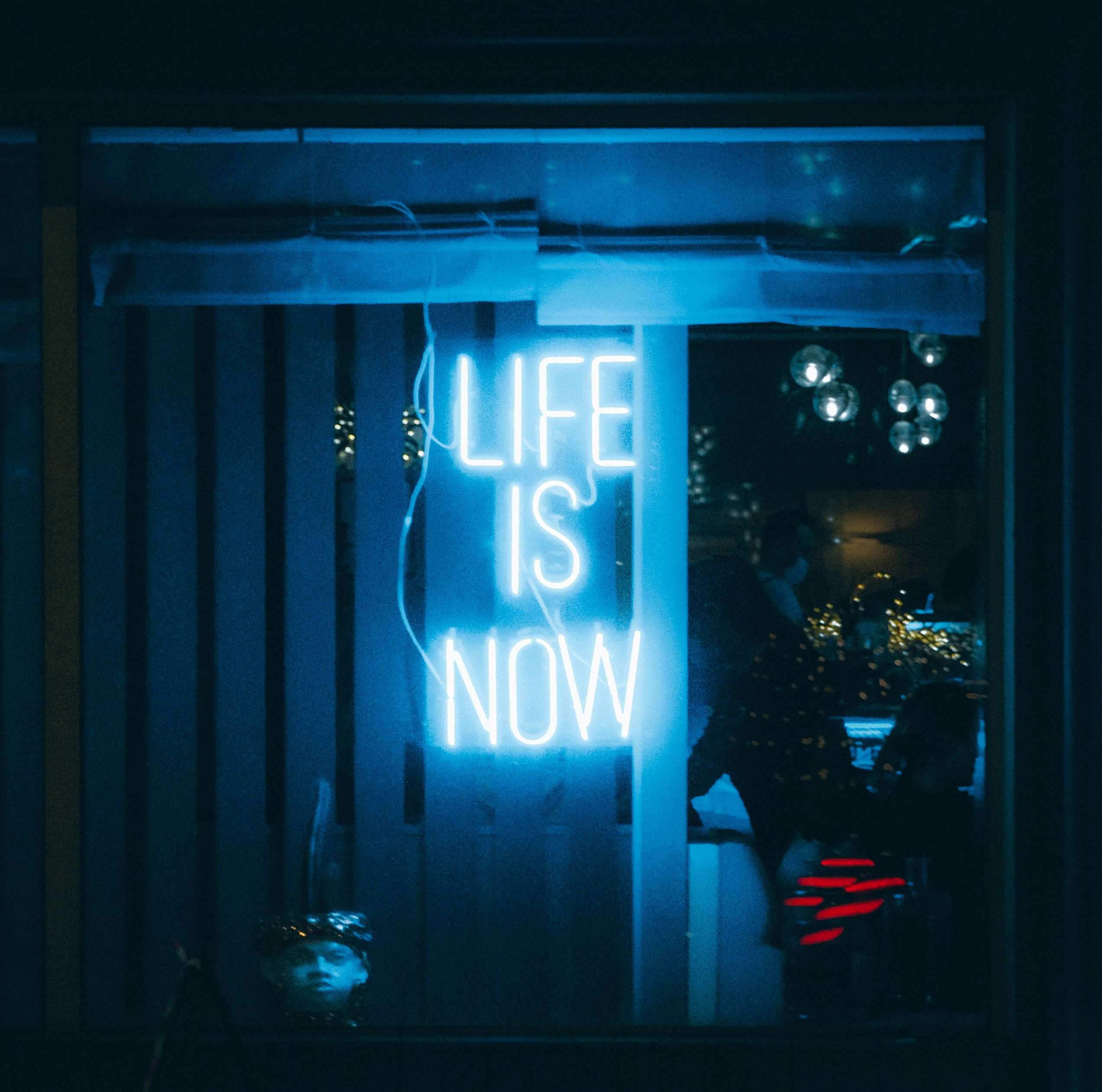
Life has a funny habit of being exactly as beautiful as you allow it to be, which is either the most annoying sentence you have read all week or the most liberating one.
The good news is that you do not need a personality transplant or a mountain retreat to access it. You need a slightly better operating system for your brain, and that system is more available to you than you think.
The Life You Create – The Mindset Reality Check
The idea that simply telling yourself “I can grow” magically rewires your abilities has taken a beating lately. A 2025 structured review of 24 randomized controlled trials found that the highest-quality growth mindset interventions produced effect sizes so small they barely register, somewhere between negligible and nothing. Telling a student “your brain is like a muscle” does not, on its own, turn them into a straight-A scholar. Nobody enjoys hearing that a beloved self-help concept has a footnote the size of a small country, but pretending otherwise would not be helpful, direct, or honest, and it would definitely not be very intelligent, emotionally or otherwise.
Here is where it gets interesting instead of depressing. The nuance in the 2026 research is not that mindset is fake news. It is that mindset alone, chanted like a mantra with no structure behind it, does very little. Mindset paired with strategy, feedback, and effort is a different story entirely. Neuroscience backs this up at the level of the actual organ doing the thinking. MRI and EEG studies show that people who treat mistakes as information rather than verdicts display stronger neural error-detection signals and more activity in learning-related brain regions. Fixed thinking triggers a defensive threat response. Growth thinking engages the prefrontal cortex, the part of your brain responsible for actual problem-solving rather than panic.
Translation for the skeptics among us: your belief about whether you can improve does not directly rewrite your talent, but it absolutely changes what you do next after you fail, and what you do next is the entire game. A useful update to the classic theory comes from Buchanan and Kern’s work on the “benefit mindset,” which reframes the goal from “what can I personally learn” to “what can we build together that neither of us would have reached alone.” That shift, from self-focused growth to collective contribution, turns out to matter a great deal in the next section, because life is rarely a solo sport, no matter how much your inbox wants you to believe otherwise.
Emotional Intelligence Is the Part Of Life Nobody Wants to Practice
If growth mindset is the engine, emotional intelligence is the steering wheel, and far too many of us are driving through life with our hands nowhere near it. Emotional intelligence, or EQ, is the ability to recognize your own emotions and other people’s emotions, and then to actually do something useful with that information instead of firing off a reply-all email at 11pm.
A longitudinal study of university administrators tracked over two academic terms found that emotional intelligence and psychological empowerment measured early in the study positively predicted work engagement later on. In plain English, people who managed their emotions well became more invested in their work over time, not the other way around. The emotional skill came first.
Workplace research keeps landing on the same point from different angles. A bibliometric analysis of EQ and job performance spanning studies from 2000 to 2024 confirmed a consistent relationship between emotional intelligence and how well people actually perform their jobs, particularly in fields where conflict and stress are part of the daily furniture, such as healthcare, banking, and hospitality. None of this should be shocking. The person who can stay level-headed during a client meltdown tends to outperform the person who matches the client’s energy and escalates the meltdown into a full production.
What YOU Choose In Life – Where the Rubber Meets the Road
Theory is lovely, but you did not come here for a lecture. You came here for something you can actually use the next time your sister-in-law comments on your parenting or your manager reorganizes the team for the third time this year.
Relationships. We understand life and who we are through relationships. Every long-term relationship eventually produces a disagreement that has nothing to do with the dishes and everything to do with feeling unheard. A fixed mindset says “this is just how we are, we always fight like this.” A growth-and-EQ approach says “this is a pattern I can actually name, and naming it gives me options.” Instead of reacting to your partner’s tone, you get curious about what is underneath it.
This is not about becoming a doormat or swallowing your feelings for the sake of peace. It is about recognizing the difference between a genuine boundary and an old wound getting poked. Couples who practice this kind of emotional regulation are not couples who never argue. They are couples who argue and then actually repair, because repair requires the self-awareness to say “I overreacted” without treating that admission as a personal failure.
The same logic applies well beyond romantic partnerships. Friendships drift apart not because people stop caring, but because nobody wants to be the one to say “I felt left out and I do not know how to bring it up without sounding dramatic.” A friend with decent emotional intelligence names the feeling plainly, without a three-week grudge simmering underneath it. Family relationships benefit even more, because family dynamics tend to be decades old and running on autopilot. Recognizing that your father’s criticism comes from his own anxiety rather than a personal vendetta against your career choices does not excuse the criticism, but it does change how much power that criticism gets to have over your Tuesday afternoon.
Work. Picture the classic scenario: you get passed over for a promotion you were certain you had locked in. The fixed-mindset version of you spends three weeks composing a resignation letter in your head and quietly resenting everyone in the building. The growth-mindset version asks for specific feedback, treats the disappointment as data rather than a verdict on your worth as a human being, and uses the emotional intelligence to notice that your manager was stressed and rushed during that conversation rather than deliberately cruel.
This is not toxic positivity, which is its own kind of dishonest. It is simply choosing to respond to a setback as a solvable problem instead of a life sentence. The research on dual-focused growth mindset in the workplace, the belief that both you and your working conditions can improve, found that employees with this outlook showed higher resilience through major workplace disruption, including the chaos that followed the pandemic. Believing your circumstances can change is not naive. It is a functional survival skill.
There is also the very modern workplace challenge of being managed by someone less experienced than you, or watching a colleague get credit for your idea in a meeting you were not even invited to. A fixed mindset treats this as proof that the system is rigged and effort is pointless. An emotionally intelligent response separates the sting of the moment from the actual facts on the ground, then decides on a next move that serves your long-term interests rather than your short-term satisfaction.
Sometimes that means a direct, calm conversation with the colleague. Sometimes it means documenting your contributions so the pattern cannot repeat quietly. Either way, the goal is a solvable problem handled with a clear head, not a grudge nursed indefinitely in the group chat.
Society. Zoom out further and the same principle scales up. Communities that treat a problem like homelessness or addiction as a fixed, unsolvable tragedy tend to produce fixed, unsolvable policy. Communities that treat it as a complex but improvable system tend to actually move the needle, slowly, imperfectly, but measurably. Contribution-focused thinking, that “benefit mindset” mentioned earlier, is showing up in how organizations approach collective problems. The question stops being “how do I personally win” and becomes “what does the whole system need to function better,” which turns out to be a far more productive question when you are dealing with anything bigger than yourself.
The World Is Doing Better Than Your Feed Suggests
If your only source of information about the state of humanity is a scrolling app designed to maximize your outrage, you would reasonably assume civilization is one bad Tuesday away from collapse. The actual data tells a more complicated and considerably more hopeful story about life in the wider world.
Take malaria, a disease that has quietly ended more human lives across history than almost anything else our species has faced. According to the World Health Organization’s 2026 World Malaria Day report, since the year 2000 the world has averted an estimated 2.3 billion cases and 14 million deaths. Forty-seven countries have now been certified malaria-free, including three in 2025 alone. Twenty-five countries are currently rolling out malaria vaccines to protect ten million children every single year, and next-generation mosquito nets now make up 84 percent of all new nets distributed globally. This is not a minor footnote. This is one of the great public health achievements of our lifetime, happening largely without a headline.
Beyond the big global wins, ordinary people keep doing extraordinary things without waiting for permission or applause. Community fridges stocked by strangers are feeding neighbours in cities across the world. Volunteer divers are pulling ghost fishing nets out of coral reefs one weekend at a time.
Teachers are quietly rewriting curricula to give kids the emotional vocabulary that most of us had to figure out the hard way, in our thirties, usually during a breakup or a bad performance review. None of these people are doing it for a feature story. They are doing it because contribution feels good, and because a benefit mindset, it turns out, is not just a nice concept in a journal article. It is a description of what humans do when they decide the win is bigger than themselves.
It’s Up To You.
Somewhere between putting positive affirmations all over the house and being a doomsday prophet who believes the world is ending, is a way of living that focuses with intention and productivity. Your mindset will not single-handedly rewrite your abilities, but it absolutely determines whether you keep showing up after the inevitable setback. Your emotional intelligence will not prevent hard conversations, but it will determine whether those conversations leave a relationship stronger or in ruins.
The world is not fixed, and neither are you, provided you are willing to treat both as ongoing projects rather than finished verdicts.
Life is beautiful if you let it be, not because everything works out, but because how you meet the things that do not work out is entirely, stubbornly, within your control. That is either the best news you have heard all day or an uncomfortably large amount of responsibility. Choose to see it as the former. Your brain, quite literally, will thank you for it