

Digital ID. They’re calling it convenience. We’re calling it what it is — the infrastructure of control.
Let’s cut straight to it. The Australian Government passed the Digital ID Act 2024 and wants you to believe it’s about making your life easier — no more fumbling for your passport to prove you’re you. Sounds lovely, but if you think a government that’s been quietly expanding its surveillance toolkit since COVID is doing this purely out of the goodness of its heart, we need to have a longer conversation.
Digital ID is not a card, it’s not a new number, and it’s definitely not just a login. According to the legislation itself, it’s “a distinct electronic representation of the individual that enables the individual to be sufficiently distinguished when interacting online.” Translation: a single digital fingerprint tied to everything you do, everywhere you go, every service you access. That should make you sit up straight.
Digital ID: What the Government Says It Is
Here’s the official version. The Department of Finance says the system is voluntary, privacy-protected, and regulated by an independent watchdog — the ACCC as Digital ID Regulator and the OAIC as privacy regulator. The system, known as the Australian Government Digital ID System (AGDIS), expands on the existing myGov and myGovID frameworks, letting you access government and — by late 2026 — private sector services without handing over your physical documents every time.
On paper? Not insane as we already live online. Identity theft is rampant. The 2022 Optus and Medibank data breaches exposed millions of Australians, and the government argues that centralised, accredited verification reduces how often you need to hand your licence to a stranger on the internet. The ACCC issues accreditation, sets the rules, enforces compliance. The OAIC provides privacy oversight. It all sounds orderly.
By the Numbers
The Labor Government has allocated $654.3 million over four years to build and roll out the Digital ID system — up from an initial $288 million. That is an extraordinary amount of money for something they keep telling you is completely optional.
The “Voluntary” Problem
Here’s where it gets uncomfortable — and this is the part the politicians don’t want to linger on. Section 74 of the Act states that “creating and using a digital ID is voluntary.” Full stop. Except it isn’t really full stop. Because right below that, in Section 74(2), the legislation quietly allows businesses to require digital ID for online services, as long as they offer an in-person alternative.
In practice, that means a bank can legally demand your digital ID to open an account online — and if you refuse, your only option is to walk into a branch. Liberal Senator Alex Antic flagged this exact loophole, pointing out that as our world moves further online and branches close, that “in-person alternative” becomes increasingly theoretical. He put it plainly: the system is bringing Australia “one step closer to a dystopian digital future.”
There’s broad scope for this bill to minimise people’s ability to engage in online transactions, including when it comes to banking.— Senator Alex Antic, Liberal Senator for South Australia
Then there’s the exemption clause. The Digital ID Regulator has the power to grant exemptions to the voluntary nature of the legislation — if the regulator decides it is “appropriate to do so.” Senator Antic nailed it: “That’s hardly comforting. It’s simply up to the regulator to determine whether making a digital ID mandatory is appropriate or not.” The guardrails are only as strong as the people holding them. And political winds change.
Senators Who Refused to Stay Quiet About Digital ID
It wasn’t just Senator Antic raising the alarm. When the Digital ID Bill was rammed through the Senate in March 2024 — with Labor refusing to allow proper debate before passing it — Senators Matt Canavan and Gerard Rennick tabled a dissenting report highlighting the lack of limitations on agency powers, inadequate safeguards against misuse of biometric data, and serious concerns about law enforcement access to the system.
Rennick, who has since launched the People First Party, has been vocal about the broader agenda behind Digital ID — connecting it to surveillance infrastructure, the war on cash, and a political system that consistently prioritises the interests of large institutions over ordinary Australians. He’s warned that Digital ID without robust protections is a tool that future governments — regardless of party — could weaponise against citizens who don’t comply with the “approved” political line.
Senator Antic went further, tabling the Digital ID Repeal Bill 2024, co-sponsored by Canavan, Rennick, Pauline Hanson, Malcolm Roberts, and Ralph Babet. More than 125,000 Australians signed his petition to scrap what he called a “digital identity power grab.” That’s not a fringe reaction — that’s a quarter of a million people smelling something rotten.
The Global Playbook — WHO and the Bigger Picture
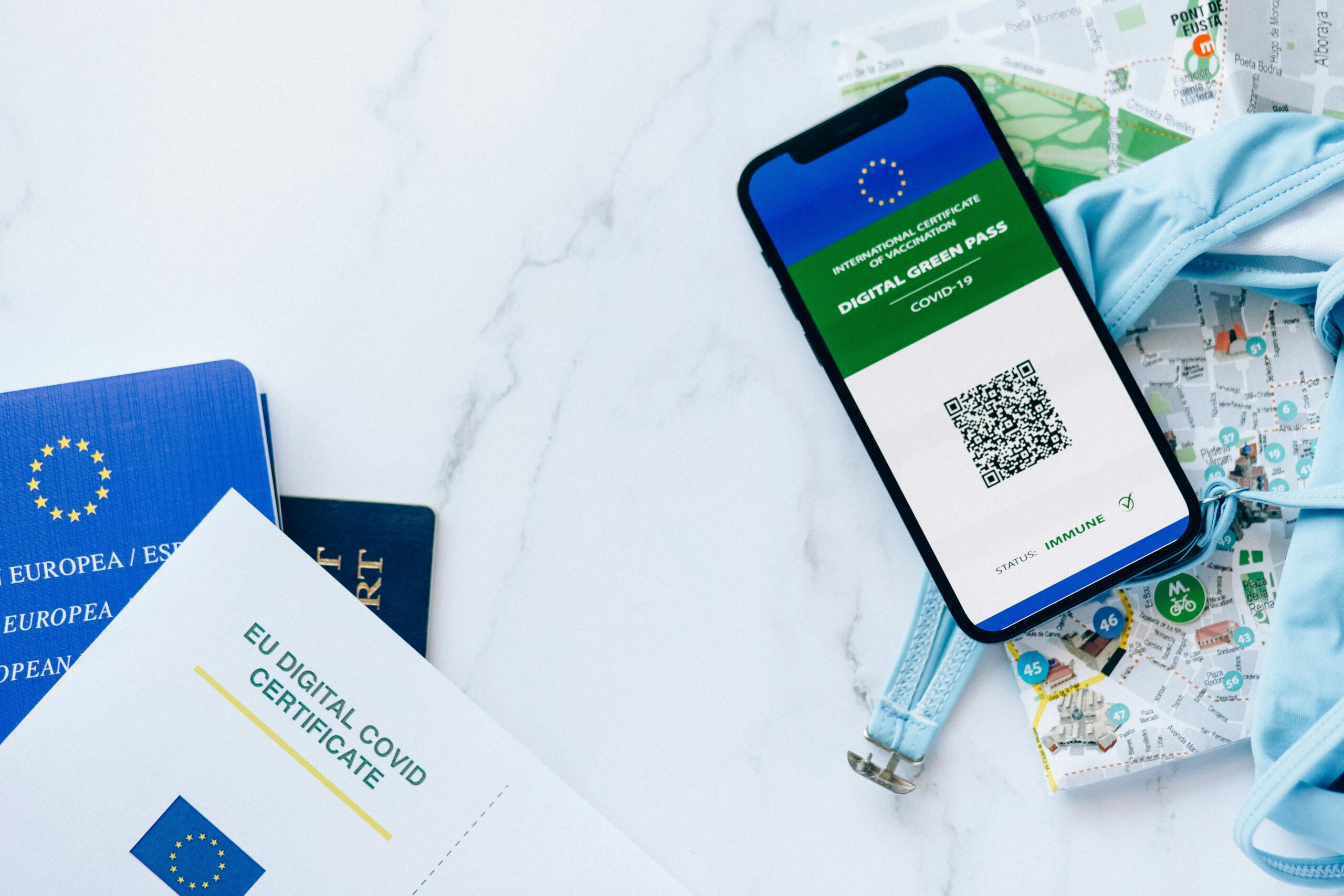
You can’t look at Australia’s Digital ID in isolation. This is part of a coordinated global shift. In June 2023, the World Health Organization launched its Global Digital Health Certification Network (GDHCN) in partnership with the European Commission — explicitly built on the infrastructure of the EU’s COVID-19 digital certificate system. The WHO’s stated aims are health document portability, pandemic preparedness, and cross-border verification of vaccination records.
The WHO insists it won’t access individual personal data — that remains with member governments. But amendments to International Health Regulations in 2024 now require global acceptance of digital vaccination certificates starting in late 2025. That’s not a suggestion — that’s a mandate baked into international health law. The GDHCN is the architecture. Your digital health wallet — linked to your national digital ID — is the access point.
Ask yourself: if all of this was purely about stopping you re-entering your name into forms, why does it require international treaty-level coordination and a $654 million investment?
The American Warning Sirens
Across the Pacific, the alarm bells have been ringing for years. Tucker Carlson — now running one of the most-watched political podcasts in the world after leaving Fox News — has consistently framed digital ID and centralised data systems as a mechanism for elite control of the population. His core argument: governments that can control your identity can control your access to money, services, speech, and ultimately your ability to participate in society. Once the infrastructure exists, the temptation to use it never goes away.
Alex Jones — whatever you think of the man — has been shouting about biometric surveillance and digital control systems since long before most people knew what a QR code was. His basic thesis: that powerful institutions are building interlocking systems of control — financial, digital, biological — that will eventually leave ordinary people with no ability to opt out. The corporate media spent years calling him paranoid. Then COVID happened, and digital vaccine passports became government policy in multiple countries overnight. His broader concerns about digital ID as a precursor to a social credit system are no longer treated as fringe by anyone paying attention.
A CCP-style social credit system can’t really work without a system of digital ID being introduced first.— Senator Alex Antic
The Social Credit System Nobody Wants to Talk About
Here’s the scenario that should keep you awake. China’s social credit system didn’t appear overnight. It was built piece by piece — digital payment infrastructure, surveillance cameras, data aggregation, biometric ID — until one day citizens woke up to find their ability to travel, access finance, and run a business was contingent on their behaviour score. No single step felt dramatic. Each one was sold as sensible.
Australia’s Digital ID connects to your bank account, your health records via myGov, your government services, and eventually private sector providers including utilities, telecoms, and financial institutions. Once that web is complete, the question isn’t just “is it voluntary today?” — it’s “what happens when a future government decides non-compliance is a public health risk, a security threat, or a form of misinformation?” Senator Antic asked exactly this. Nobody in the government has given a satisfying answer.
So What Do We Actually Do With This?
Here’s the nuanced truth that the loudest voices on both sides often miss: a secure, privacy-respecting digital ID system, genuinely voluntary, with robust independent oversight and zero interoperability with surveillance or law enforcement without explicit warrant — could legitimately reduce identity fraud and make life easier. The concept isn’t inherently evil.
But that is not what was built. What was built is a system rushed through Parliament without proper Senate debate, with voluntary protections that have legal loopholes you could drive a truck through, with a regulator that holds the power to remove those protections at will, in a global context where your national digital ID is being designed to interlock with WHO health certification and private sector data systems. The architecture of control doesn’t require malicious intent at the start — it just requires the infrastructure to exist for when someone with malicious intent eventually gets their hands on the controls.
The Bottom Line
Nobody is saying don’t ever have digital ID. We’re saying: demand watertight protections. Demand mandatory parliamentary debate. Demand the exemption clauses be removed. Demand sunset provisions. And refuse to let any government — Labor or Liberal — tell you that $654 million of your money spent on a system that can override its own voluntary protections is nothing to worry about. Your identity is the last thing you actually own. Don’t hand it over without a fight.
The people screaming loudest that you’re a conspiracy theorist for asking questions about Digital ID are the same people who told you COVID vaccine mandates would never happen. Ask the questions anyway. Read the legislation. Sign the petitions. Make your representatives answer on the record — not in press releases, but in Parliament, on camera, in writing.
Because convenience is a hell of a Trojan horse.
This article reflects the author’s analysis and commentary on publicly available information. Hyperlinks are provided to primary sources including the Australian Government, the WHO, and official Senate records. Readers are encouraged to review all linked materials and form their own conclusions.
Share this if it made you think.